I’ve always been a fisherman. Fishing is part of who I am.
From the age of 3, I grew up next to the confluence of the rivers Kird and Arun. They were my playground, my swimming pool and before long, my fishing beat. My first memory of fishing is of a specific bend of the river, sitting next to my grandfather with an old split cane fishing rod held between the two of us and a pot of worms we had dug up in the garden on the floor below. It is a beautiful spot, a bed of yellow waterlilies sit beneath an overhanging bush to my right, the river flowing in from my left and back out at a right angle straight in front of me. It is a deep pool on a relatively narrow, shallow, and unexceptional stream in a field of cattle and mushrooms.
I can’t actually remember catching a single fish there with him. In fact, I’m sure I must have caught my first fish there, but that never really factors into it when I remember most fishing trips. Most of the time I remember the wildlife on the banks, rather than the wildlife I manage to tease out from under the surface. Occasionally, if we stayed out late enough, we would get to see the barn owl glide out of the old stable building and hunt mice along the river bank. In spring, the banks burst into life, huge reeds grew from the waters edge and kingfishers would flit past us as we sat watching a small wooden float drift by.
From the age of 12 I was spending every day after school beside the river with a group of friends, catching perch after perch. Every weekend I’d be up at the crack of dawn to head down to the commercial ponds in search of new species and to try out different techniques. Then, when on holiday visiting my granddad, he would take me down to the River Tyne and show me how to fly fish for trout and salmon, even letting me hold the rod with him as he played a salmon once.
He was a fantastic fisherman. There are albums full of photographs of him and his catches at my granny’s house, one of which I have tucked inside my wallet. From wild rivers in Scotland to the very spot on the South Tyne where he had shown me how to cast a fly line (and to untangle back-casts from trees), he always stood proudly beside his catch with a fly rod in hand. I was always told that the only way to catch a salmon was on the fly and that spinning or, I dread to think it, prawning, was a crime punishable by death.
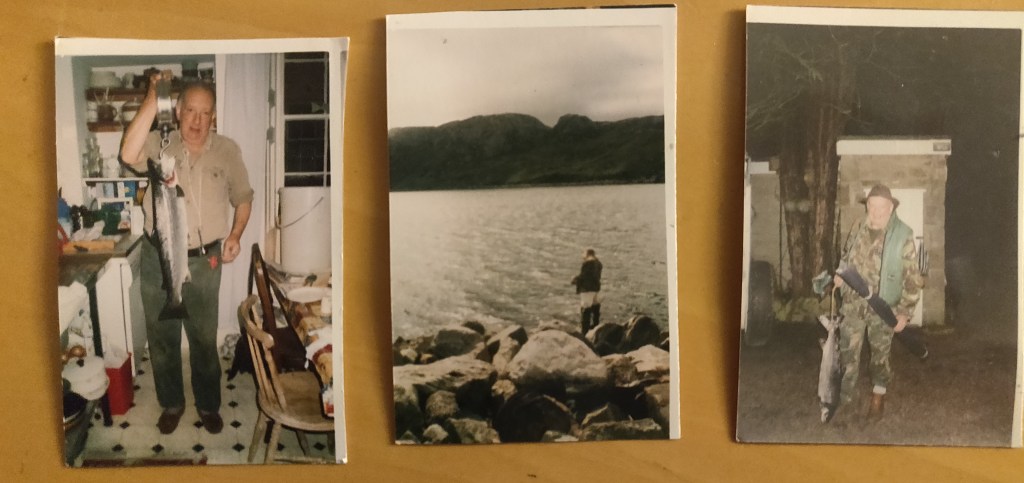
Every year I fish that stretch of South Tyne. Sometimes he has been there next to me, guiding my casting. More recently, he hasn’t. And I have caught fish, without fail (in a fisherman’s memory), every single time I have been. From beautifully red-spotted brown trout to slabs of fresh-run silver sea trout, I’ve caught fish on fly and lure (but never prawns or worms). But the one fish that still eludes me to this day is the salmon.

The Atlantic salmon is the jewel in the crown of any freshwater fisherman in the UK. It is a migratory species, hatching in small streams in the hills and mountains; salmon spend around 3 years in their birthplace as eggs, alevin, fry and finally parr, growing and undergoing adaptations that prepare them for a life at sea. Once the adaptations are complete and they’ve traded in their freshwater parr marks (camouflage) for silver flanks, they become smolt and begin their journey downstream to the sea. Salmon can spend any number of years at sea, but typically they feed for around 3 years, growing to sexual maturity and getting ready to return to their birthplace to spawn.
Salmon almost always return to the river they hatched in. As they make their way upstream, salmon turn red in colour and the males grow a hooked jaw called a kype, used to fight off competing males. Using a method called olfactory imprinting, salmon use their sense of smell to follow chemical cues to return to almost the exact spot that they hatched, beginning the cycle anew. Those returning from their first time at sea often weigh between 2 and 6 pounds and are named grilse. Any salmon that has returned to its home river more than once can no longer be called grilse. These mature fish can reach weights exceeding 20 pounds.
I had been trying to catch a salmon on every single trip I had taken to the river, to show my granddad that I too could catch the best. I caught sea trout in bright daylight and brown trout up to 2 and a half pounds (both uncommon occurrences), but never a salmon. I’d get up at the break of dawn and head to the river to try my luck, every time returning with the wrong fish, met with my grandfather’s laughter, tinged with slight disappointment that today was not my day.
It’s not that I don’t know what I’m doing. I almost wish that were the case. I have guided my dad (who has fished a couple of times but never for salmon), leading to him catching a grilse on day one. I brought my partner for her first ever salmon fishing trip, in her first year of fishing: grilse again. My grandfather loved hearing this more than anything. I would have two enormous sea trout, one in each hand, and yet they would bring forward a grilse to rapturous applause. At least something I’m doing, or instructing others to do, is right.
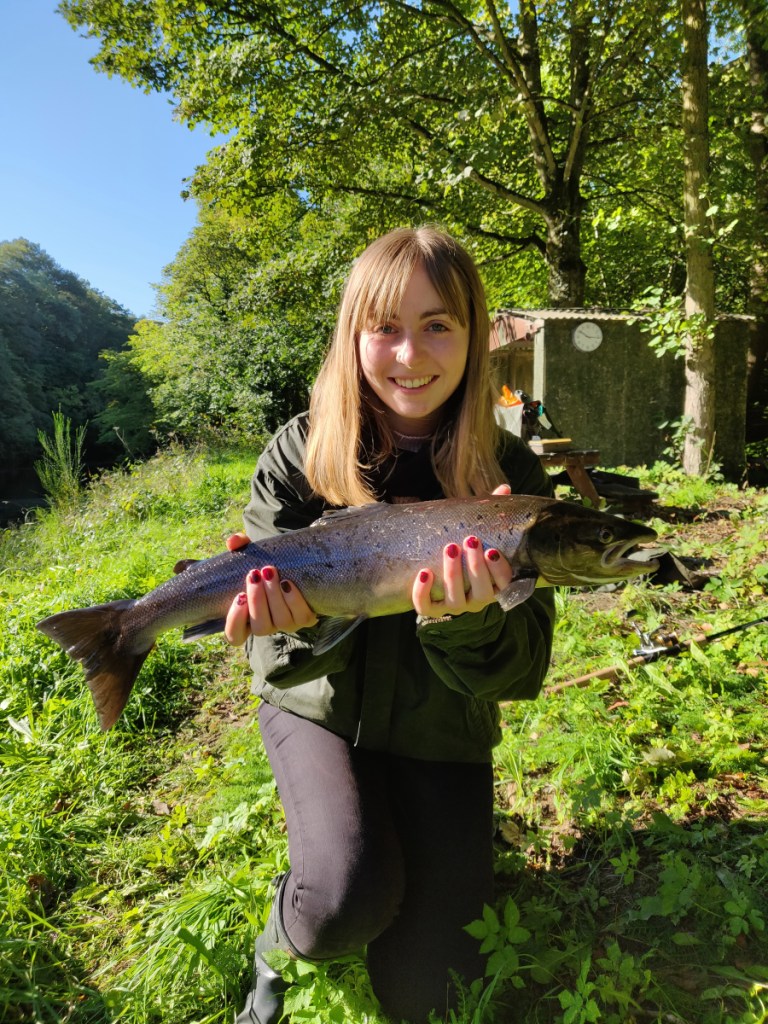
Last year my grandfather passed away. He hadn’t been able to get down to the river for a couple of years, but I had been to visit a number of times to see him, and try to catch him a salmon. Without success.
The last time he went down to the river was a mild morning in May last year. He sat under a blanket with my family and watched me casting out a series of three flies, in search of brown trout. Miraculously, I managed to bring a couple of trout to the net that day, one of which we took home with us and froze for a later date.
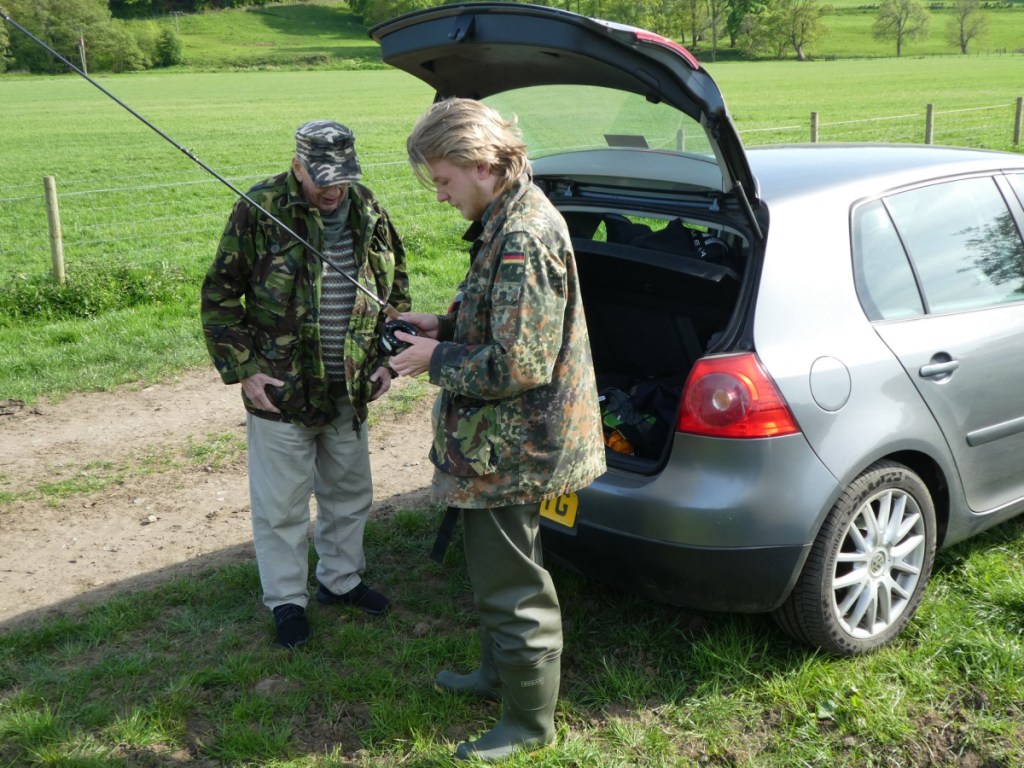
I visited my grandmother a couple of weeks ago in October and fished again in that same spot. Only now have I realised that I sat there that evening, in his chair, eating the last fish he ever saw me catch.
It was this trip that this blog revolves around. As with every trip to my grandparents’ house, as soon as I arrive I am instantly looking towards the river. It runs past the bottom of their garden, just on the other side of a railway line. As usual, I was up before the sun and ready to go fishing. My partner joined me on this morning at a stretch of river known as Gooseholm. The conditions could not have been better suited for spinning. We had been down the night before and the water had fallen from the latest spate to about 1 foot above normal. Usually, at this height, I would climb in with a fly rod but I was still unsure about the potential flooding. There was a little colour in the water and the temperature had fallen a little. It was cloudy, a little windy, but not raining. On the walk down to the riverside and the fishing hut we saw a bright silver bullet splash down into the river about 20 metres from our chosen spot.
We took it in turns to cast – a little unfairly I’ll admit, as I fished for around 70% of the time. From around 6:30 to 8 am we saw plenty of fish jumping. I took over once again and changed my lure to a large gold/bronze sandeel imitation I had bought recently to catch sea bass and sea trout in estuaries and rock marks.
Another salmon splashed down 20 metres in front of me – a huge red brute – and I cast 10 metres past it and 15 metres upstream and began working the lure across the top of the water. As it neared the area I had seen the fish, a massive head broke the surface and clamped down on my lure. I was finally in.
Partly in shock, I held on to the fish and let it bully me, the reel screaming as it stripped line from me. I was basically a bystander. It took me steadily downstream and I quickly tried to adjust the drag on my reel to allow me to fight it back. After a minute or so of to-and-fro, the fish made a mad dash downstream again, towards the rocks. Again, I fought back. Knowing that I didn’t have the strongest breaking strain line on, I wrestled cautiously with the fish, making a minor gain in line before it ran again, taking me into the rocks. I ran downstream, following the fish as it swam into the rapids. It kept on moving down, between boulders, I kept moving down the bank. Using the weight of the flowing water, it gave one last enormous surge, and snapped my line on a submerged rock.
I was despondent. I kept fishing for another 3 hours, trying every pattern of lure in my case, every retrieve, anything. But it was not to be. As a consolation prize I caught another beautiful brown trout that I returned, but it still wasn’t a salmon.
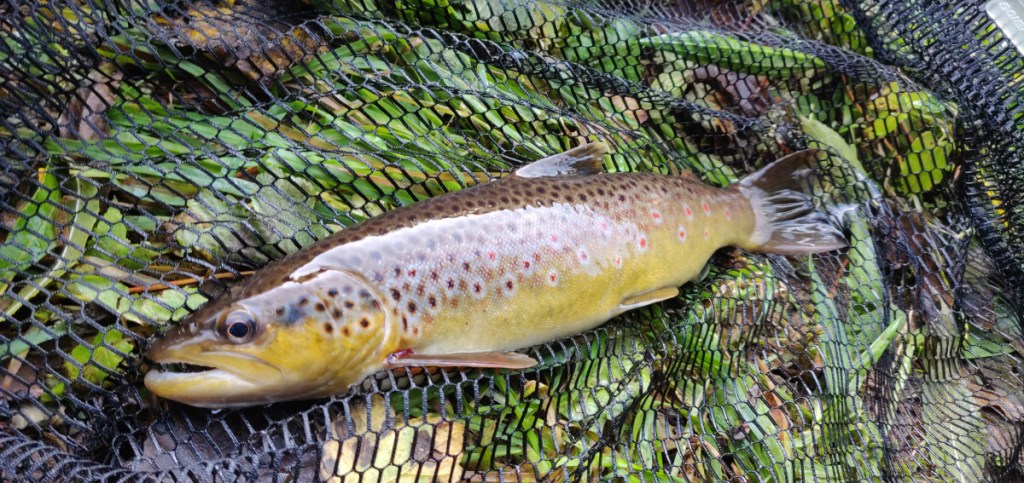
I’ll be back again at the start of the new season, no doubt about that, having spent the close season, as I do every year, reading up and learning more watercraft, fly presentation, retrieve styles for certain lures and, this year, how not to lose a salmon.
A little bonus reading.
When my grandfather passed away, I started to research his contributions to the traditional angling press. I know he has had articles published in a number of magazines (many of which I am still looking for), but the most interesting article I came across was not written by him, but about him – potentially without him ever knowing. The following image is a snippet of page 37 of the Newcastle Evening Chronicle on the 8th of January, 1960.
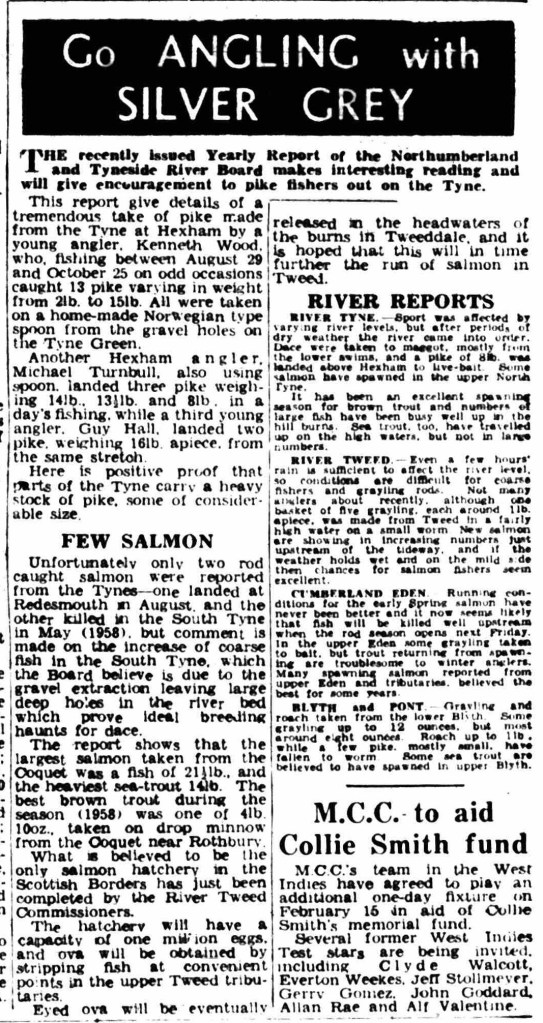
In the second paragraph you will find his name, Guy Hall, alongside the mention of two 16 pound pike.
Now, you can catch pike on the fly (a technique gaining popularity currently), but this, along with the fact he always had fishing lures aplenty when I visited, has led me to believe he may have been telling porky pies to me about the supremacy of the fly and his rejection of spinning. On my latest visit, I began the arduous task of sorting through his fishing tackle, and I couldn’t believe my eyes when I found hundreds of new and used lures in boxes and packets around his study.
I’ve been a fool. No wonder he was laughing at me. He probably still is.
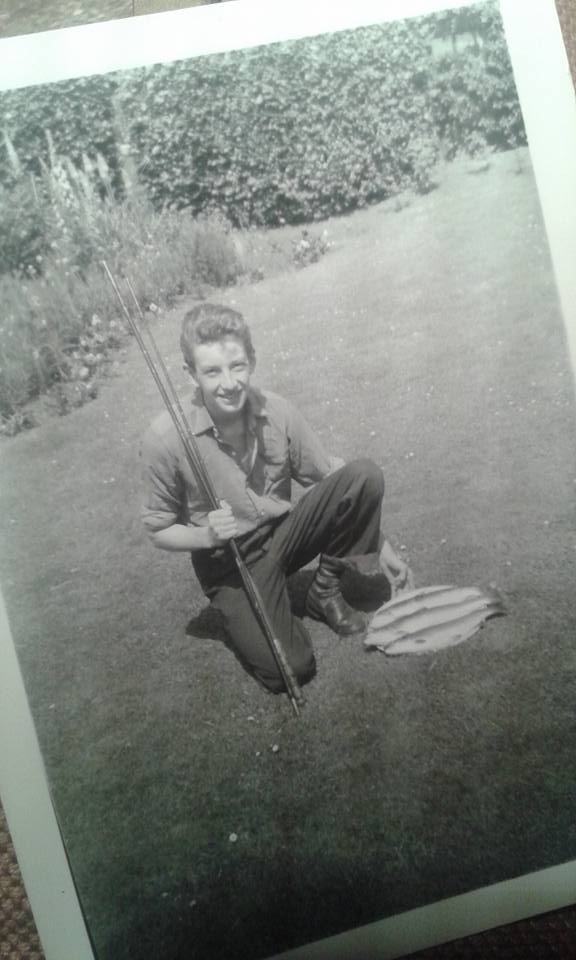
 Paddy Fowler
Just wonderful. I’m a university pal of Hazel’s. Lovely the memories of Porky … was struggling for a moment there with the reference to Guy Hall! I bought a picture of fish painted by him, and I treasure it!
LikeLike
Thank you, Jerry. I don’t think many people know him as anything other than Porky! I have a painting of his of two leaping salmon in my flat that reminds me of him (and his fish catching abilities) every day.
LikeLike